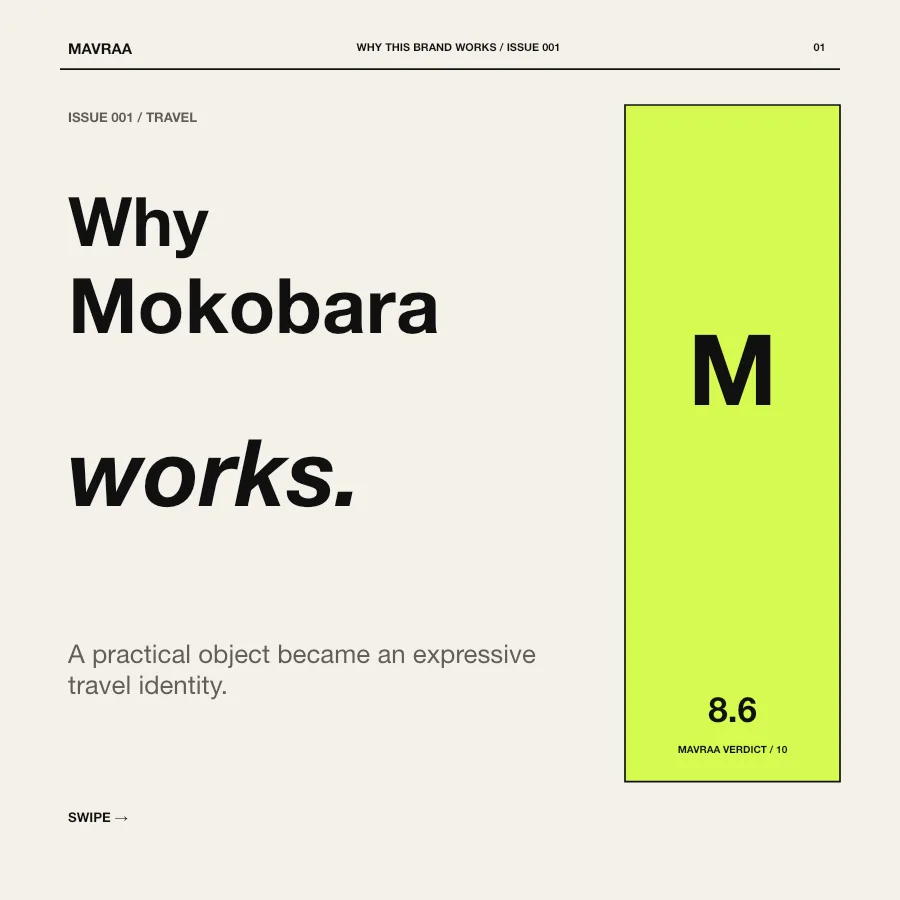
001 / Travel
Why Mokobara works.
Colour and naming make luggage feel expressive before feature comparison begins.
Read issue 001 →Independent teardowns of brands that have made strong choices—through positioning, product, content, conversion and retention. Not praise. Transferable thinking.
Six categories. Six different ways a brand can create pull. Every issue ends with one tension worth watching.
6 issues shown
Colour and naming make luggage feel expressive before feature comparison begins.
Read issue 001 →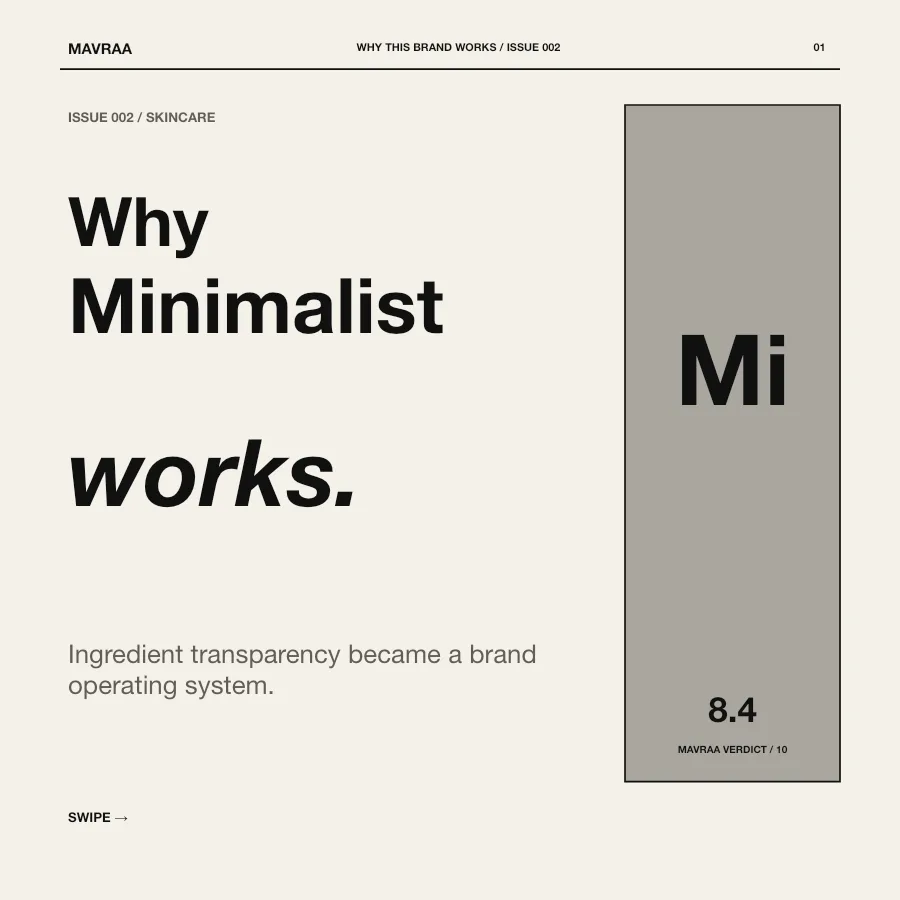
Ingredient transparency works because it governs product, packaging and education together.
Read issue 002 →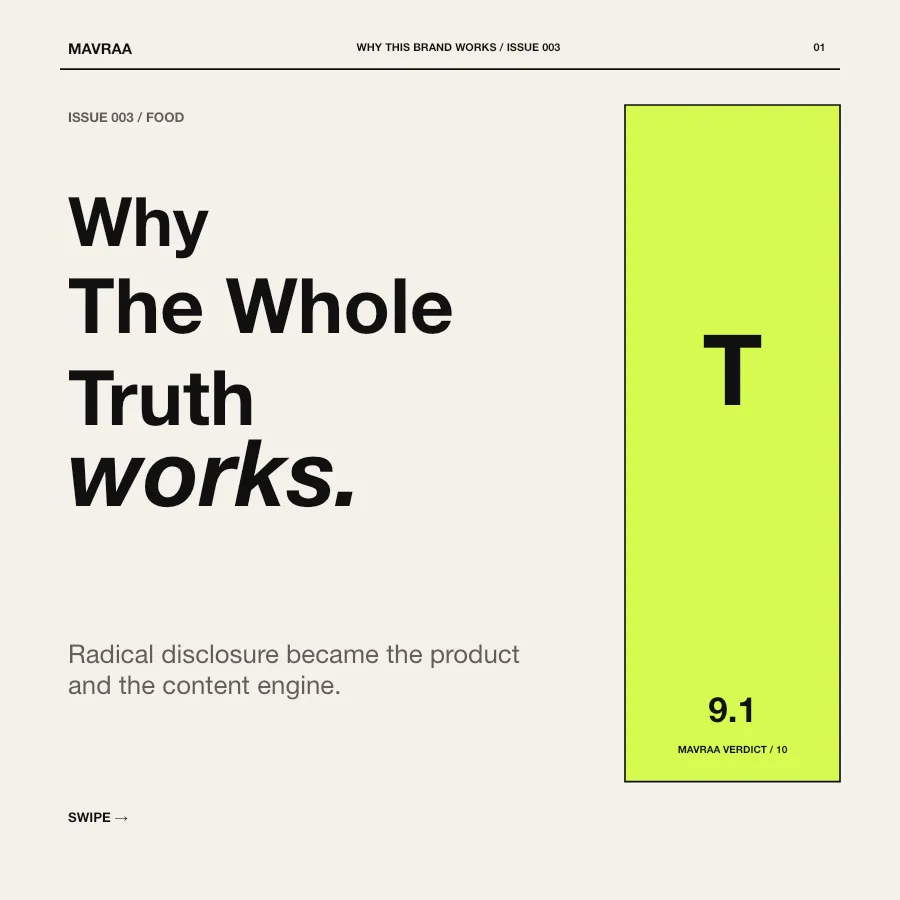
Radical disclosure becomes both the product promise and the content engine.
Read issue 003 →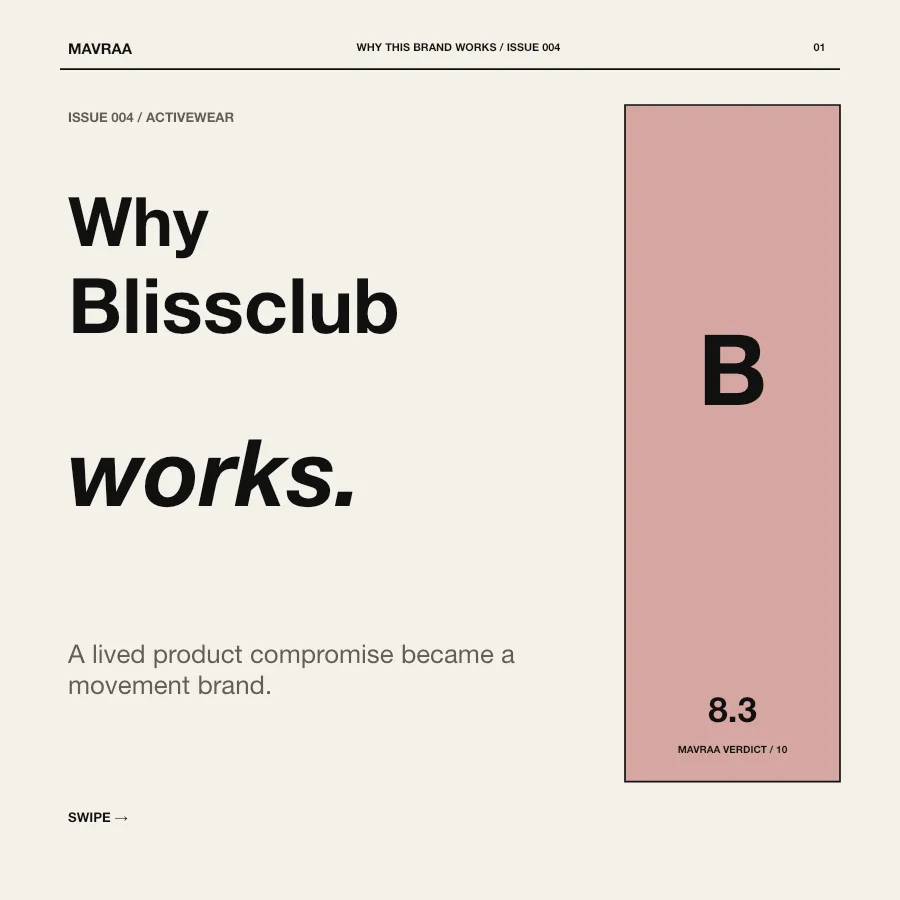
A lived product tension gives the brand movement language customers can identify with.
Read issue 004 →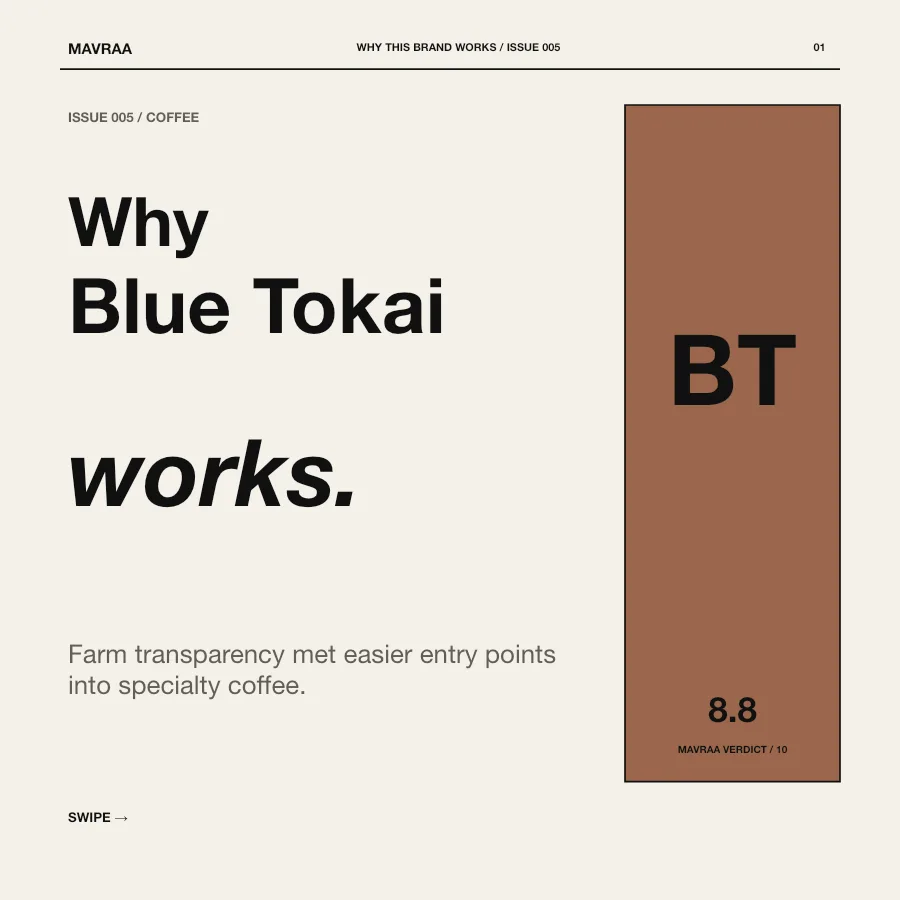
Origin transparency becomes approachable through easy entry points rather than expertise theatre.
Read issue 005 →A customer-specific product promise, digital learning loop and sequenced distribution turned adaptation into advantage.
Read issue 006 →No issue matches that search yet. Try a category or a broader strategic term.
Category frame, audience tension, promise and the language people can repeat.
Product, packaging, colour, naming and repeated visual or verbal codes.
Conversion proof, product architecture, retention signals and compounding loops.
The anonymised Brand Pull Benchmark turns diagnostic patterns into a quarterly category-and-stage view—then into founder memos and practical LinkedIn thinking.
Explore the benchmark →Send a D2C brand with an interesting strategic choice—brilliant, flawed or both. Strong submissions become future issues and LinkedIn breakdowns.
Suggest the next brand → Mavraa